What really comes first in branding and websites–the copy or design?
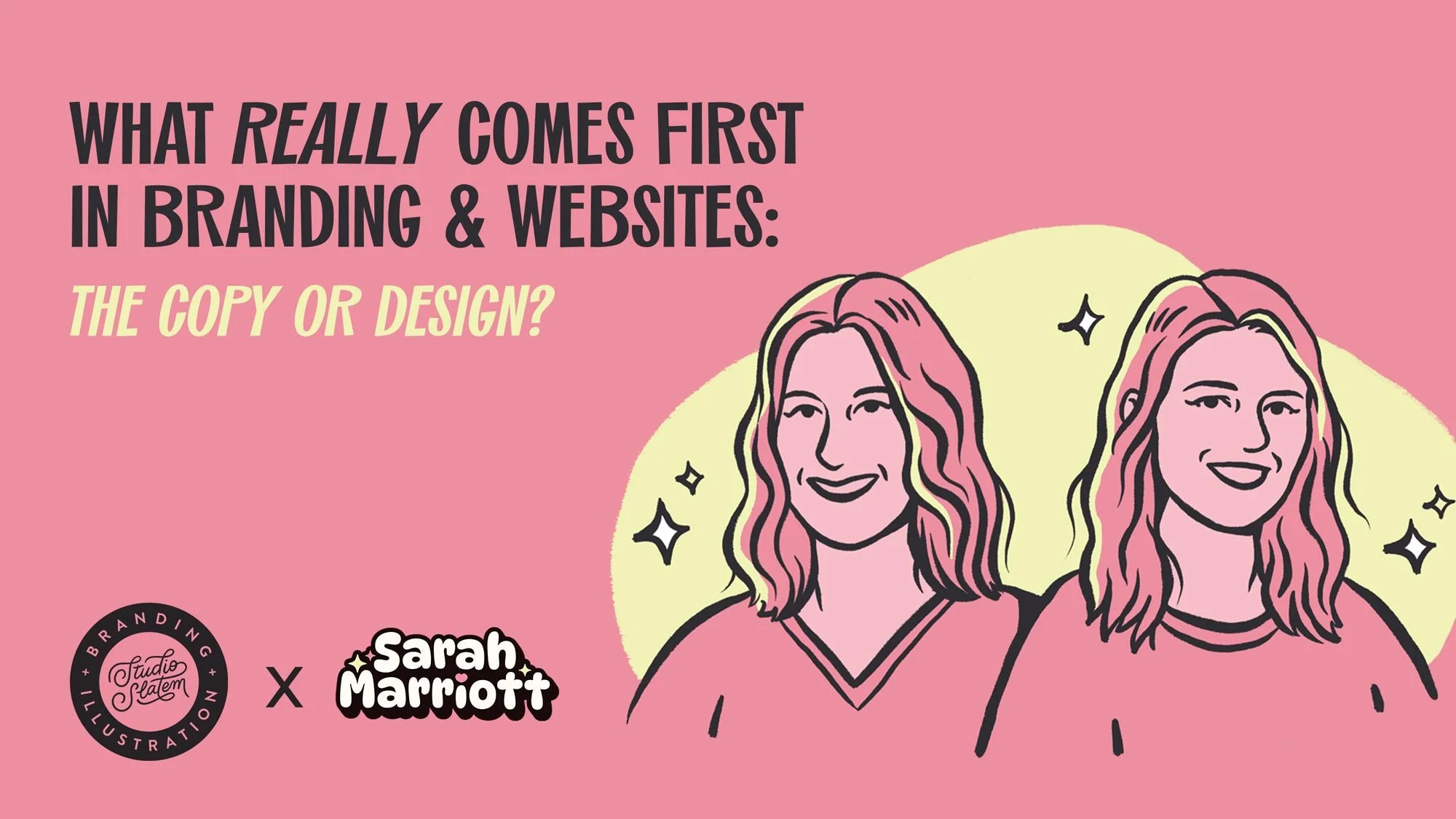
Written by Sarah Marriott and Amy Slatem
Whether branding or copy comes first is one of the most debated topics in the creative industry (well, that and how much coffee is too much coffee).
And while there’s no purely right answer, there is the smartest way to approach it. It’s most important to take context into account—where the design or copy is being applied first—before coming to a conclusion.
And because branding and websites just so happen to be where Amy (a brand designer and illustrator) and Sarah (a website copywriter) find themselves immersed in on the daily, we’ll be breaking down these two specific areas. The answer often depends on exactly what you're building, and we’re here to help you make the right decision.
Let's talk about branding, bebbe! Why brand design should set the visual foundation first
Impactful brand design (attractive logos and visuals aside) should be built upon a foundation of strategy, reason and purpose. Not just vibes or what looks nice alone (here’s looking at you, Pinterest!)
Every colour choice, font selection, and photo treatment needs to come together to paint a very specific visual story for a very specific audience and purpose.
Which is why, when the visual direction (theme, vibe, and tone) is established first in the branding phase, it should give the copywriter a strong foundation to work from in the copy stage. This is often the preferred approach in the branding space.
Taglines, mission statements, positioning statements, and brand voice are easier to nail once the visual world exists. The copy adds the voice (and how it thinks) to the brand, extending beyond the visuals alone.
The ideal collaborative flow when it comes to brand design
When the designer leads the strategy (delving into the why, who for and how), they inform the visual identity and design decisions. This then forms the foundation upon which the copywriter can come in mid-process (ideally) to create the copy needed for the layout and final design choices during the brand rollout.
With these essentials already on hand, the copywriter can use them as a base to create a brand voice guide for the client. This is an essential guide (also known as a brand bible or tone of voice guide) to how a brand communicates verbally with its audience.
It’s all about the words and phrases the brand will use, its overarching voice or theme, and the tone in which it speaks. It’s to help the brand stay consistent, building trust and connection through familiarity. It also makes it easier in the long run because the brand has a set of guidelines to follow, reducing guesswork when creating content and marketing materials.
The strategy work from the designer can be used as a reference, and from there, the brand voice guide can be further built out with these oh-so-important elements:
Brand values
USP
Mission
Positioning
Brand archetypes
Brand personality and voice
Tone of voice
Copy samples (how everything is applied to the copy)
This ensures that everything stays together in a single, cohesive document and can also be used alongside a visual brand style guide.
It’s basically a brand match made in heaven!
Using both together helps ensure a brand is consistent across everything it puts out into the world, making the brand message stronger and maintaining its integrity.
However, if a copywriter is only brought in once the branding is complete, marketing materials, social media assets and, most importantly, the website may need to be redesigned. That's because any templates or mock-ups created during the branding phase are often based on placeholder copy and intended only to demonstrate the overall look and feel.
For this reason, it's best to engage a copywriter around the same time as your brand designer. This allows them to begin developing the copy while the branding process is underway.
The benefit? Your website and supporting marketing materials can be designed using the final copy from the start, helping to save both time and money while creating a more cohesive result.
Brain dump note: That said, if a client comes to the brand designer with copy and strategy already done, then angels sing out in the ears of the designer because it means a lot of the initial thought work and positioning has already been done, and can give more insight and perspective into the design phase.
All in all, when it comes to developing a brand in terms of the design and visual approach, both design and copy can, and should, evolve together.
TLDR: Our take on the order of copy vs design in branding
Design (when grounded in strategy) can lead, with copy following close behind and building on it to create a truly holistic brand with soul, personality and consistency.
Why copy should come first when building a website
In contrast, when it comes to building a website, many clients prioritise design. Understandably, they want to know their site will be functional, easy to use and visually impressive. After all, 75% of people judge a company's credibility based on its website design.
But what many business owners don't realise is that design and copy play very different roles. The design is what grabs attention and creates that first impression: "Oooh, look, impressive website!" The copy is what turns interest into action: "Oh wow, it's like they're talking directly to me."
A website without intentional words means there’s nothing to:
Tell the viewer who you are, what you do, what you offer and why you are different
Guide the viewer to the next step, e.g. enquire now, book a call, sign up to the mailing list
Show the viewer they are in the right place, which validates their needs
There’s no point having a stunning design if the words on it don’t take the reader from A (interest) to B (action).
When copy comes first in website design, the copywriter can lead the design's strategy and structure.
Here are a few things they might do in the process:
Research competitors to see how the client can position themselves in their copy, what language they use, and how to make their message different and stand out.
Research specific brand voice and tonal references that the client is drawn to, and if they want any similar parts applied to their own.
Work out how to make the client’s positioning shine through the words so people can see them as an authority and credible source.
Create brand-approved words and phrases to pepper throughout the copy for personality.
Structure the page properly so it adheres to buyer and marketing psychology. Websites should guide readers through a specific journey and use the right triggers to make them feel something.
Strategically place call to actions so they are intentional, not random. It allows the viewer to take a specific action or reach out with confidence easily.
The design can then be shaped around the copy structure, allowing for a smoother design flow and a more strategic page layout.
What can go wrong when website design leads without copy?
If the website design is all nicely laid out but without the copy on hand, some of the problems you could run into could be:
Forcing copy into sections that don’t fit, mucking up the layout to a look that doesn’t fully align with the agreed-upon vision.
Defaulting to placeholder text that is either too long, too short, or doesn’t give a realistic idea of what the final product would look like. This means more work, time and money to restructure the layout to fit the actual copy.
Using placeholder text that appeals to the aesthetics rather than intention, e.g. using a headline or a call to action when it doesn’t strategically need to be there.
Weakening the hierarchy, with the design dictating what the copy should say rather than it being written purposefully. This also goes for SEO. It could contradict essential SEO elements, making the website unoptimised.
Brand voice and tone should give an overall vibe of the brand, so there’s a risk they won’t match the pre-made design and could lead to a disconnect. And no brand wants a website that doesn’t make sense or doesn't speak to the brand as a whole.
Basically, if you lead a website without the actual copy first, it’s just a template.
Which is fine too. Some projects will run like that.
But all templates require additional time and effort for the designer to rejig the layout into the final on-brand product.
By having the copy from the get-go, you’ll save time (and money) by skipping the unnecessary step of a “look and feel” stage. This delivers a more complete design the first round, with sparkling copy and design all at once.
The case for a collaborative copy and design process
However, there is a way for design to come before copy on websites.
If copy and website design are done as a collaborative service, e.g. the copywriter whitelabels for the designer, then the strategy behind the design can help kick off the copy:
The designer will already have the strategy worked out, so they will have an idea of the page structure and how the copy fits within it, producing a detailed wireframe or plan.
The copy can be created and structured according to this strategy, but the design can easily be adjusted if sections need to be added for connection and articulation.
Our take on websites
Unlike the branding process, our website verdict sways towards strategy and copy first, allowing the design to shape around it.
Copy and design are a match made in heaven because they work seamlessly together. But to avoid frustration, double handling and rebuilds that can cost time, energy and money, it’s easier to have your copy written first and then build the design around it.
TL;DR: the final word from a website copywriter and a brand designer
Strategy always comes first: Before starting to design or write, the strategy needs to be sorted first, and this is one of our non-negotiables. It helps build a strong foundation, clarity and confidence going forward. Starting without a strategy often leads to losing time and money down the track.
Branding and websites aren't the same: Each has a different approach. For branding, it’s better to lead with design, with copy to follow. For a strong result with websites, copy should come first, with the design shaped around it.
Your design does the attracting, your copy does the converting: A beautiful website that doesn’t speak to your ideal client won’t turn visitors into enquiries. The design’s job is to attract and impress, while the copy communicates and converts.
Shortcuts have a cost: Relying on AI-generated copy or DIY-ing without solid knowledge and skills in persuasive copywriting can cost you time, energy and money. It may feel “quicker” or “easier”, but bringing in a professional copywriter means you get the job done right the first time, without stuffing around or worrying whether it’s “right”.
Bring your collaborators in early: Keeping both the designer and copywriter in the loop at the same time will keep things running smoothly and deliver the best results.
Copy and design work best together: In reality, they should not compete; they should be complementary. The real problem isn't which comes first; it's treating one as an afterthought to the other.
It’s worth the investment: Hiring both a skilled designer and a skilled copywriter isn't doubling the cost. It’s setting you up for success, making your brand look and feel professional, reflecting your personality, experience, expertise and authority. In turn, this helps your business grow, builds brand trust and recognition, and helps bring in sustainable income (and that’s what we want, bebe!)
Hire a brand designer and website copywriter together (that’s us!)
The Creative’s Homepage Revival is the epic homepage-specific ‘let us help you” service you’ve been looking for. We, Sarah and Amy, made this offer for fellow creative business owners to finally get the professional help they need to make their homepages look and read as kickass as their client services.
Find out more about the homepage copy and design offers below if you’re ready for more aligned enquiries and call bookings through your website.
About the guest gal: Amy Slatem is a hand-drawin' illustrator and brand designer for businesses that understand that being different, confidently, is far more powerful than just trying to be "the best". Combining strategic branding with character-rich illustration, she helps brands trade generic visuals and AI same-same-ness for branding that's awfully human, bursting with personality, and memorable for all the right reasons.