
Portfolio Page Tips: Turn your projects into case studies that get you hired
Picture this…
Your potential client lands on your portfolio page. They scroll through heaps of pictures of your stunning work, thinking, “That looks nice”, and then all of a sudden, they bounce.
Not because they didn’t like what they saw (they absolutely did!). But they bailed because nothing on your page gave them a reason to believe that you’re a perfect fit for their project.
A page full of pretty pictures will only get you so far. And it certainly doesn’t matter how many times you change your portfolio layout, how many images you show, or how many different angles you use (so stop changing your page every week, please).
Because here's the thing: potential clients don't just want to see what you can create. They want to know what you can do for them.
In this post, I'll walk you through my 4-step process for writing killer client case studies and how to use them to turn your portfolio page into a client magnet, not a coffee table book.
Why your portfolio page isn't getting you clients
Look, I get it. Your visual work is exactly why you get hired, whether you're a photographer, web designer, graphic designer or packaging designer. So what's wrong with filling your portfolio with images? Absolutely nothing. Show them off, matey!
The issue isn't your images. It's the context they're shown in.
Here's why your image-heavy freelance portfolio isn't converting:
1. It doesn’t show the context or purpose for the project
Viewers see the end result in your photos, but not why you did the project or how you got there, so they can't picture you solving their problem. People connect with storytelling, and without context, your page can look vague, no matter how many beautiful images it has.
2. It hides your process and creative thinking
Your unique approach to the project is your chance to show how you work and what your potential client can expect from you. Without showing how you are different, you blend in with everyone else in your field.
3. It doesn’t provide proof of results
Clients want to know how the work made a difference, what transformation was provided and the tangible and intangible benefits that came from it. This helps them visualise what could be possible if they work with you and trust you to deliver similar outstanding results.
A better way to showcase your work: client case studies
Explaining your thinking, process, and results builds trust and connection, and strengthens proof. It shows potential clients you're the one to work with because they can clearly see you are an expert and can help them achieve the outcome they want.
And that's what client case studies do on your portfolio page.
The purpose of a client/project case study is to:
Give further context of a project, explaining a specific problem the client had before coming to you
Your step-by-step process in tackling the problem and how you solved it
The results your client achieved
Here’s how you can write a killer case study that supports your kickass work and inspires your potential client to enquire:
Step 1: The Challenge - What was the client’s problem, and why did they come to you?
The struggle your client was facing and how it was affecting their business or life
Why or how they couldn’t solve the problem themselves
Why they specifically came to you for help
What did they want to achieve?
This is a good section to show the problems and pain points your client was experiencing. It helps potential clients reading your website empathise and realise they may be experiencing similar things. It reinforces why they need you!
Step 2: The Brief - What was your plan for solving the problem?
How you intended to solve the problem and your vision for the project
What deliverables you could provide that were a good match for what they needed
Why these deliverables would help them achieve their goal
Here is where you outline the plan and show how awesome you are at problem-solving, zooming in on the whole picture and working out possible solutions. It shows your potential client that you can tackle a challenge with strategy, purpose, and intention before starting.
Step 3: The Approach - What was your unique approach and process throughout the project?
Show your approach to the situation and why you chose to do it that particular way
Explain your process throughout so they can understand how you work
What was working, any challenges you faced along the way and how you solved them
How the project was coming together and shaping into the outcome
This builds undeniable trust with your potential client, because they can literally see your thought process in action! By understanding how you work, they can imagine what it would be like to work with you on their own project.
Step 4: The Outcome - What results did your client end up with?
How the client instantly felt when you delivered the final project
What tangible outcomes and benefits did they see after (e.g. metrics like 30% increase in sign-ups, leading to more sales, etc)
What intangible outcomes and benefits did they see after (e.g. feeling more confident about their brand, giving them the courage to seek a speaking opportunity, and they succeeded, etc)
The transformational aspect of the outcomes (e.g how did they feel before they worked with you vs. how do they feel now?)
Real outcomes and proof drive potential clients to take action. Now that they have read about the project as a whole, the results instantly position you as a number one choice, proving you are legitimate and trustworthy.
Top it off with a shiny testimonial, and you’ll leave a mark on their mind.
See me explain portfolio case studies on the Creative Insider podcast
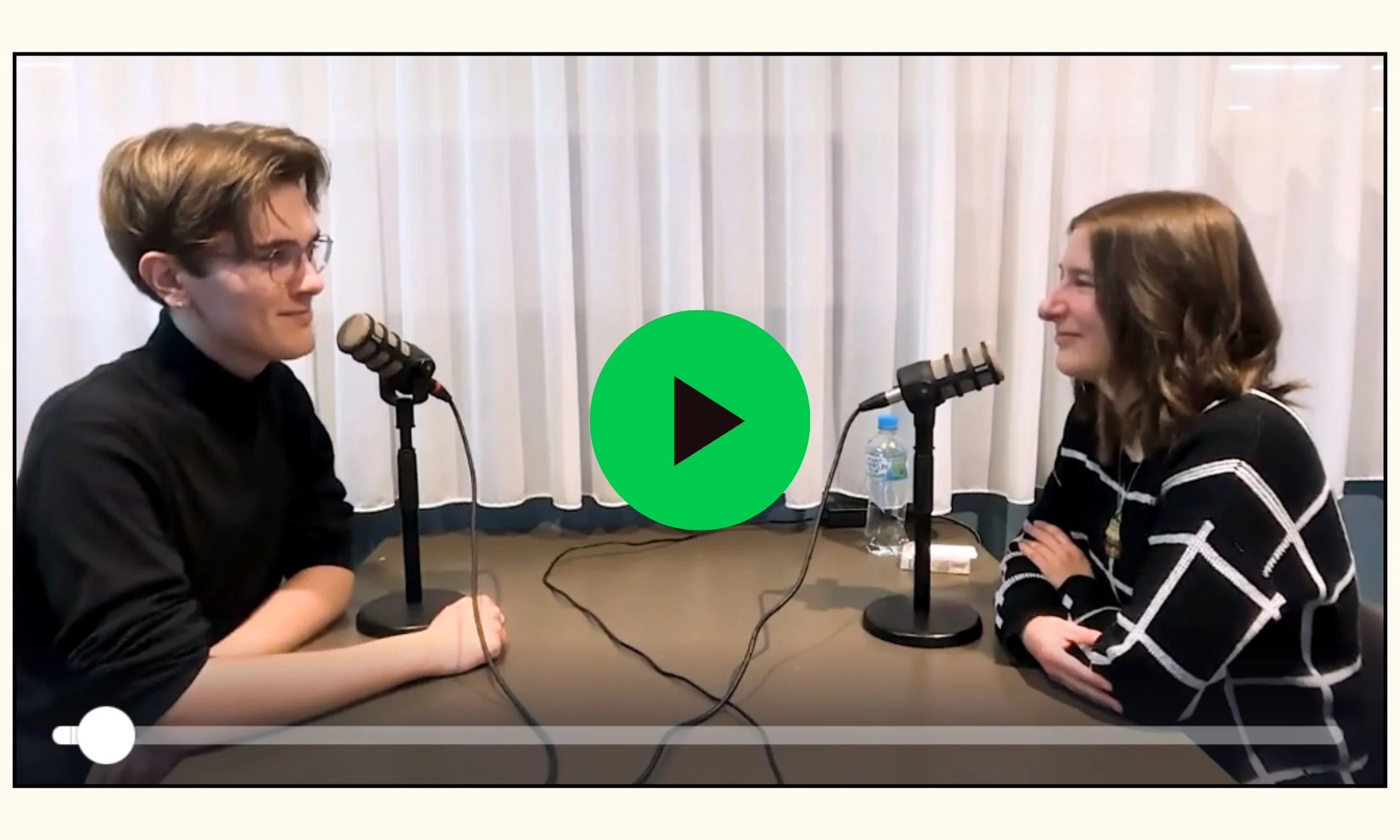
In August 2026, I had the opportunity to record a guest podcast episode. Creative Insider, a podcast for The Design Kids, is hosted by Liam Stritt, freelance graphic designer (and a lovely past client of mine).
The podcast explores creative collaborations and gives a real insight into creative minds. We chinwagged all things copywriting, websites, niching down, and especially what makes a standout portfolio pack a punch.
Take a sneak peek at my chat with Liam here about my take on case studies.
Case study examples in action!
There are a few different options for writing your case studies, depending on what information you want to include. To inspire you, check out these portfolio page examples that use case studies to showcase their kickass client projects:
Studio Slatem: Illustrative Brand Designer
The Digital Picnic - Diversity-Centred Illustrations
Studio Slatem uses a short and simple case study to give viewers a taste of the project.Brandmixologist: Brand & Packaging Designer
Espresso Gelatini - Brand Strategy, Identity + Packaging Design
Brandmixologist uses a more in-depth case study, splitting her sections into the challenge, scope, solution and outcome.My portfolio page
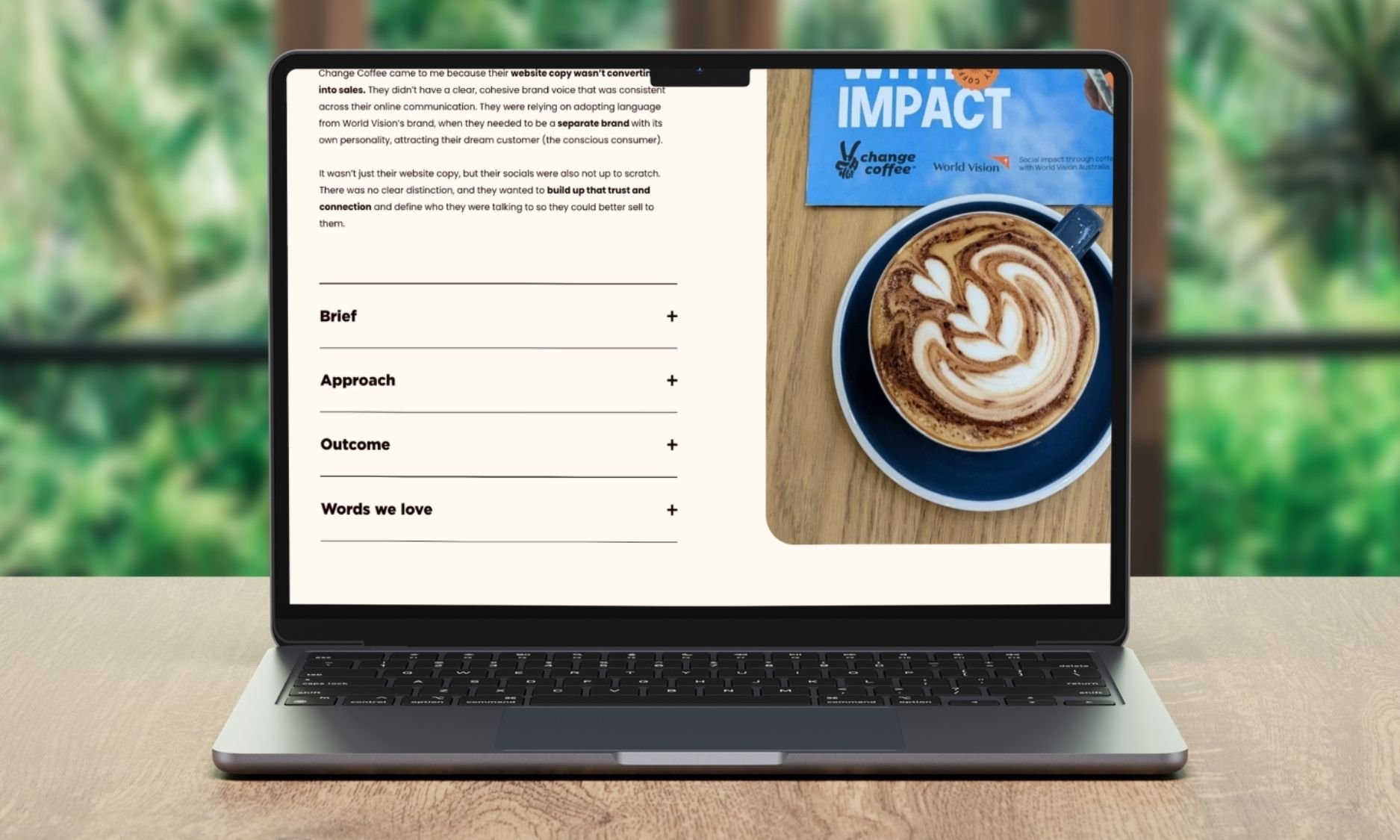
My portfolio page uses an introduction, brief, approach, and outcome for each project. I also add a “words we love” section to show some of my favourite wordy snippets.
FAQ’s about writing portfolio page case studies
1. How many case studies should I include on my portfolio page?
I recommend 3-6 strong case studies. You can still show more projects in your portfolio, but use the case studies for your projects that show the most impact.
If your portfolio page leads to a separate page for each project, you can do more! The limit is up to you. As long as you are intentional, rather than slapping long paragraphs of text for the sake of it (that’s a no-no), you can do as many as you like.
2. What if I don't have tangible client results or metrics to share?
That’s totally okay. I understand that with creative work (like a website or professional photography), you may not find out measurable metrics from the client after you’ve worked with them.
This is where you could hone in on the intangible benefits (e.g. your client felt more confident to enter the next stage of their business, they stood out more than their competitor, etc.). You can also lean on testimonials, before-and-after examples and client feedback. Just make sure you are specific about the outcomes.
3. Do I still need an image gallery if I add case studies?
Yes, keep your images. Case study copy and images go hand in hand. Adding text with your images helps connect the dots for your potential client, giving more context. Having both makes your case study stronger.
4. How long should a client case study be?
I recommend keeping it simple and scannable. Break up your paragraphs, use dot points and make it easy and digestible to read. Your case studies don’t need to be super long, but they need to have enough context to explain each part of the process.
Bonus tip: If your website platform allows it, use collapsible tabs/accordion layout to keep the information neat and tidy.
5. Which projects should I turn into case studies?
Start with your strongest projects that had a substantial process and solid outcome. While it’s okay to choose your favourite projects because they are easy to talk about, make sure you have enough material to work with to turn it into a case study.
I also recommend showcasing types of projects that you want more of. This ensures you put your niche front and centre and attract your ideal client.
6. What if I am just starting out and I don’t have any real client projects to showcase?
No stress! Here is where you can make your personal projects or projects you created from your studies shine.
Choose a project you created from your studies (university, TAFE, college, etc.) and turn it into a story.
Explain your thought process, your concepts, how you felt about working on it, what you wanted to achieve and how you felt afterwards. You can still follow the same process, but write your case study from a more personal or analytic perspective.
For a personal project, create your own dream client project for fun and turn it into a case study. Frame it as if it were for a real client (just make sure you mention somewhere that it’s a fictional project!) The world is your oyster!
Getting case studies started is easy
Your work is already good enough to win clients, and you know it! But pairing case studies with your images positions your portfolio page as proof of results, not just a pretty photo gallery. It shows your potential client why they should work with you and what’s possible for them.
By breaking your case study into something like the challenge, brief, approach, and outcome, you give your work the attention it deserves, and your page sells for you.
To start, pick one project you want to showcase, and write your case study using the steps above. It doesn’t have to be perfect! But once you have that first one written, you’ll see how it changes the purpose of your portfolio page, and the rest will follow easily.
Need some extra help from a pretty cool wordy gal?
I’d love to see how you go! If you write your portfolio page and need an extra set of eyes on it, I’m in the mix of creating a new one-page copy audit offer.
It’s a 1:1 call where I critique your page and give you actionable feedback and suggestions to make your copy clearer, more audience-targeted, and personality-packed. I help you identify what’s working, what’s not, the gaps and how to fix them.
If this sounds like something you need right now, let me know, because I will be testing the offer real soon!
Send me a DM on Instagram or LinkedIn and ask me about it. I can’t wait to hear from you.