

How to turn social media interest into enquiries with your website copy and email list
Your social media is doing its job. Ideal clients are finding you and clicking on your website. So why isn't that turning into enquiries?
It usually comes down to what happens next. They land on your website with no clear next step, no reason to give you their email, and no way for you to follow up. So they leave, and you can't rely on the algorithm to bring them back around.
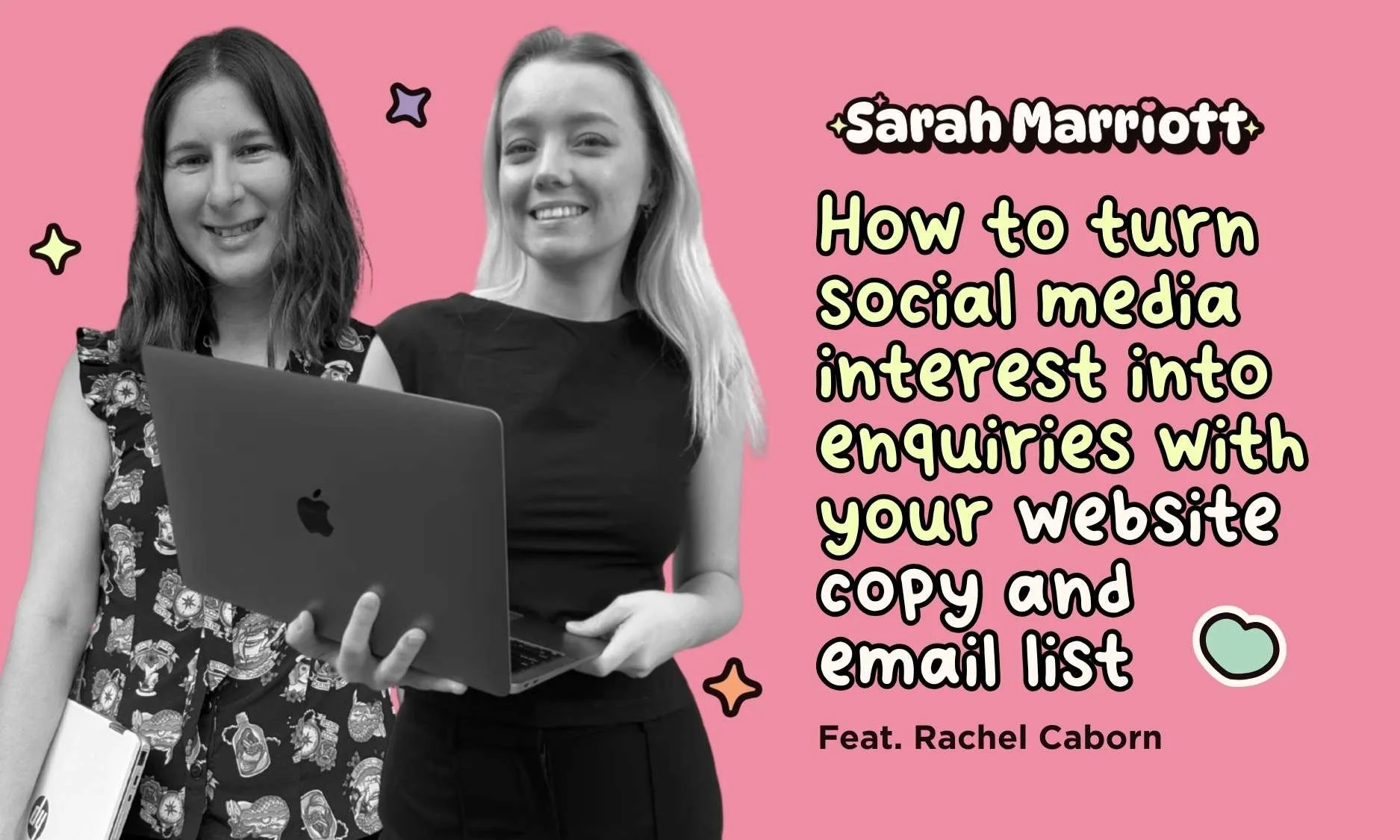
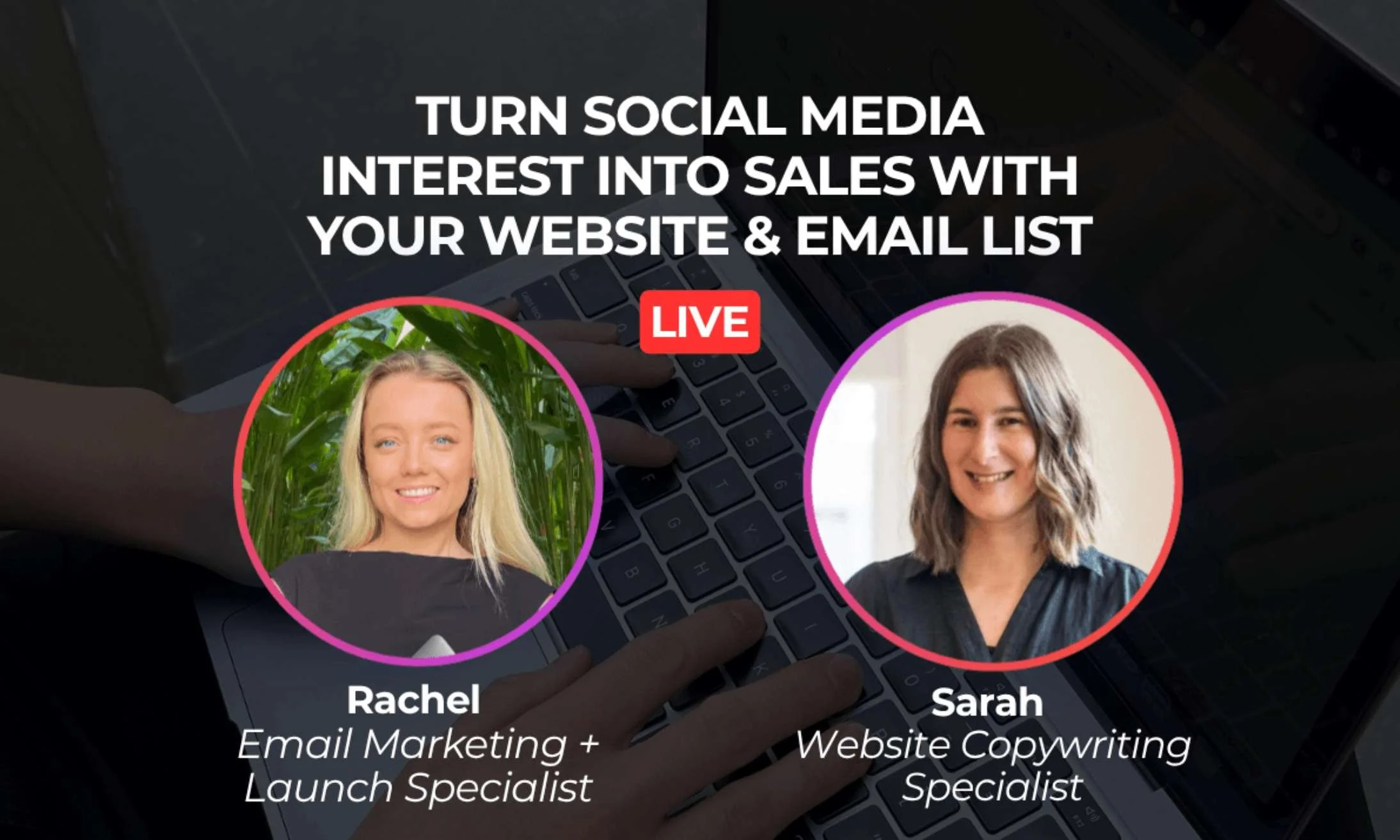
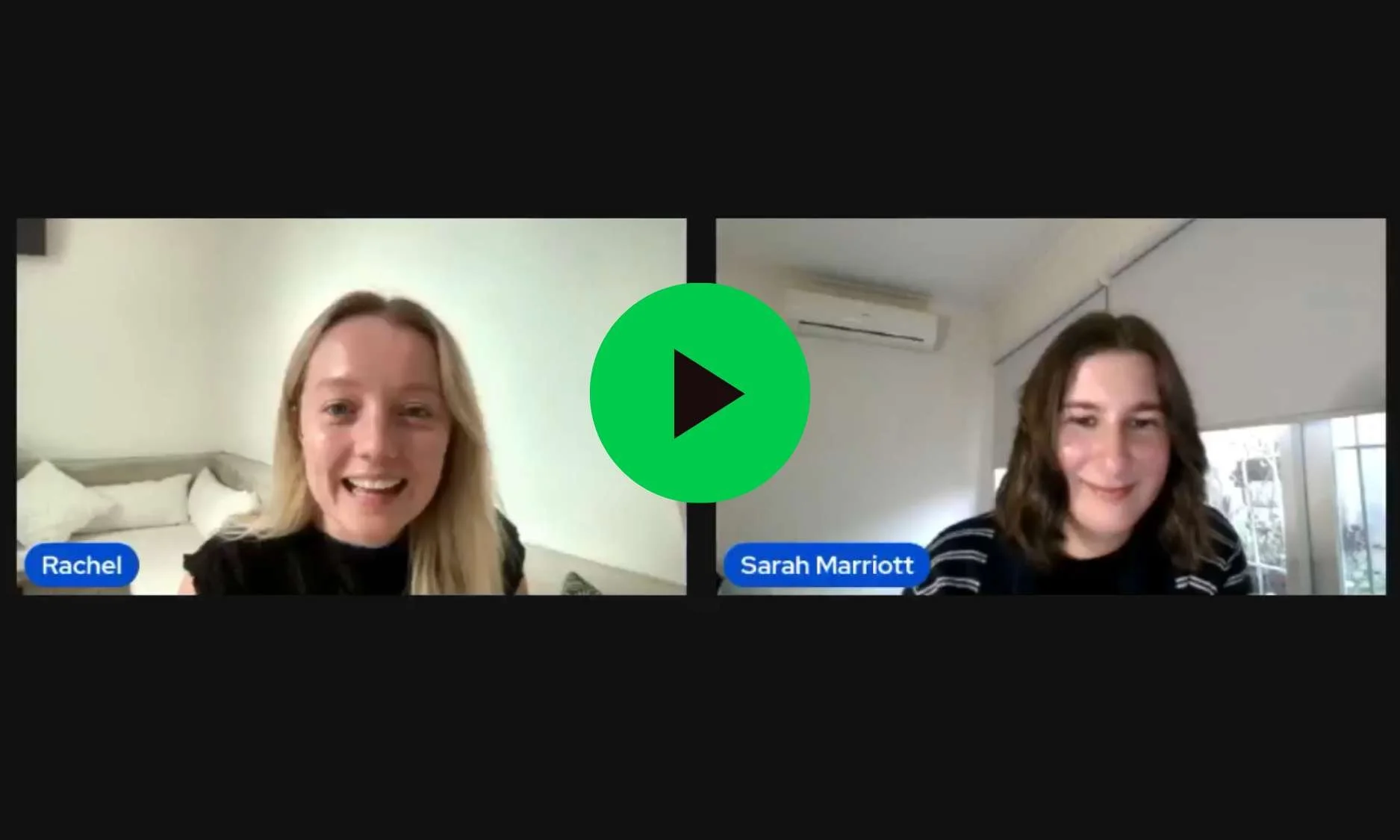
In this blog, Rachel Caborn (email marketing + launch specialist) and I (Sarah Marriott, website copywriting specialist) cover exactly what needs to happen after a potential client finds you on social media, how your website gives them a reason to take the next step, and how your email list keeps you front of mind after that.
We did our first-ever LinkedIn Live together all about this, so make sure you check out the video below for the full juicy convo.
Why treating your social media, website and email list as separate things is costing you clients
The big mistake you’re making is treating your socials, website and email list in isolation.
When you put all your eggs in the Instagram or LinkedIn basket, it can stop your potential client in their journey before they’ve even started.
This is because you spend all that time and energy connecting and nurturing them through social platforms, but when they are ready to either learn more about you or work with you, there’s nowhere to lead them to the next step.
So you run the risk of losing them because they either:
1. Can’t find the right information about your services to see if you’re a good fit for what they need
2. Don’t have somewhere to carry on the nurturing journey that has more of a chance of converting them
3. Don’t see your content again because the algorithm loves f*cking with everyone
So, here’s how you can change that and make sure you’re all set up to convert them away from your social platforms.
Think: a potential client finds you → lands on your website → joins your email list → enquires → books a call → becomes your client.
By the time you finish reading this, you’ll know exactly where your journey is leaking and what to fix first, so you can turn interest into sales.
What your website needs to do after someone clicks that link
When someone lands on your website, your messaging has seconds to confirm they're in the right place. So your website copy needs to connect, build trust, clearly inform and inspire action.
Because if they don’t find what they’re looking for, you’ll lose them in a flash, and they’ll go looking for what they need on your competitor’s website instead (ouch).
Your website is where all your relevant information should be in one spot, so your potential client can make an informed decision. They should be able to see your value immediately on your website without even having to look at your Instagram profile.
You shouldn’t have to rely on social media to carry the weight for you when your website can work seamlessly in the background, generating leads for you while you watch Stranger Things on the couch with your dog.
4 homepage mistakes that’ll make your potential client bail and how to fix them
Most of the time, your potential client will land on your homepage via a link on your social media profiles. When they get there, your homepage should be like an “airport terminal” (as said by Wordfetti), guiding your reader to where they need to go, giving them appropriate options and call-to-actions.
Here are some common mistakes I see:
Mistake 1: Too much information or not enough information
If you’re cramming the kitchen sink into your homepage and not breaking things up into appropriate sections, it's hard to read and digest. Your homepage should never be a messy blog post! This makes people leave because it takes them too long to find what they’re looking for, causing frustration or boredom.
On the other end of the scale, I also see homepages with barely any information, so they're missing the necessary sections to direct viewers to other pages on their website.
Tip to fix it:
Make sure each section has a purpose and lead your viewer to the appropriate page or action. People should never be “stuck” on your homepage. You want to make sure they check out the rest of your website and navigate through it easily.
Mistake 2: You have sections in the wrong spot
I often see sections in the wrong spot on homepages. A lot of the time, it comes down to personal preference. But I like to look at websites from a buyer-psychology perspective, meaning everything should be in the right order to align with the stage your potential client is at, and flow as they read on.
Example 1:
You have a call-to-action button in the hero section labelled ‘contact me’ or ‘book your project’ that links to your contact page/enquiry form.
But at this stage, your viewer has literally just landed on your page. They haven’t even browsed your services yet, so why would they need to contact you so early?
Example 2:
You have testimonials directly under the hero section. I know you think these show credibility from the get-go, but at this stage, your viewer doesn't even know who you are or how you can help them. So why would they need to know how good you are straight away?
Think of it like your friend is setting you up on a blind date. They are introducing you, but before your friend even tells you your date’s name, they just start telling you all these cool things about them while your date is standing there, right in front of you.
That’s a bit weird, right? You don’t even know this person! So you want to build trust and make them “get to know you” first, before showing social proof. Once they warm up to you, that’s when showing social proof makes more sense.
Tip to fix it:
Consider the customer journey first. Warm them up rather than overwhelm. Think about when you look at a website, what are the things that you want to know first before you see a testimonial? What helps build trust, so when you read a testimonial, it validates why they are good at what they do?
Mistake 3: You’re not showing how you are different from your competitors
You talk about what you do, but how do you stand out amongst your competitors so your potential client picks you? At the moment, there’s no defining wow factor, so your viewer sees you as just any Plain Jane creative service provider.
Tip to fix it:
Use credibility boosters throughout your copy:
How many years of experience you have
How many clients you’ve worked with
Specific methods you use
Outstanding results you’ve delivered
This is so you can differentiate yourself from your competitors and avoid sounding generic, because no one else will have these same qualities as you.
You can also use things like your relevant skills or education/experience background if it’s applicable. Think about what really makes you different.
Mistake 4: Your social media presence does not match website presence
This is a big one. You might be pouring all your time and energy into building authority on socials; it’s like your website is a completely different universe.
There’s a disconnect between the two that your potential client can see, which breaks trust and causes confusion. This is where your brand voice is also really important: ensuring it’s consistent across all your touchpoints helps solidify trust and predictability for your brand.
Without it, your potential client looks at your website and says, “Is this even the same person?”
Tip to fix it:
Take a handful of your best social media posts that sound like you, where you have received good engagement.
Do they use your unique brand voice, preferred language and vibe? Do they resonate with your audience? If so, note the things that stand out and use them in your website copy. Don’t be afraid of trial and error!
Okay, so your homepage got them interested, so what the f now?
Your homepage isn’t the finish line, and you shouldn’t expect it to do all the heavy lifting for you. Think of your homepage as a tasting platter; it’s there to warm people up, get them excited, and make them want to try the rest! Once you update your homepage, you may find it easier to tackle the rest of your pages, and get them up to scratch.
Your services page is equally important. It’s your underrated trust-building sales tool that makes you money! While a lot of people focus more on their homepage or about page being perfect, your services page is what actually gets you the booking.
When someone is on your services page, that means they are warm. So you want to make sure you carry them through the journey to your services and packages and how they can enquire.
Let your homepage set the tone and then go from there. Make sure your services are explained clearly and that it’s easy for your viewer to reach out to you to enquire.
If you’re like “where the heck do I even start”, check out my blog ‘Before you DIY your website copy, read these 5 tips first’ to help you get going.
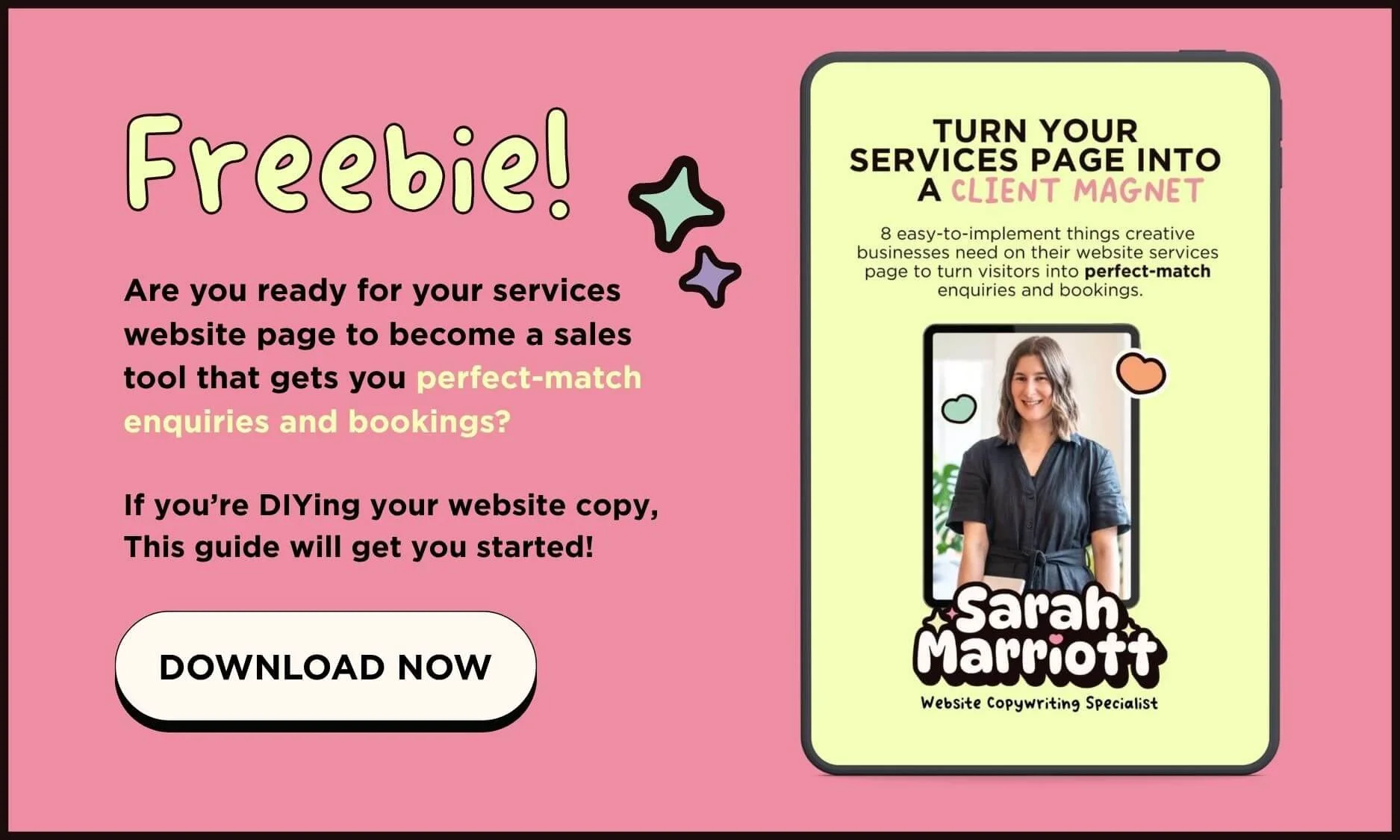
You can also check out my free guide and checklist ‘Turn your services page into a client magnet ’, which walks you through a real client services page example, so you can see exactly how to write yours and turn visitors into perfect-match enquiries and bookings. ⬇️
Now, onto emails. How do you even get people to sign up for your email list?
When you have an email list, you’re going to be showing up consistently in your subscribers' inboxes, with no algorithm! The people who sign up for your email list want to be there and want to hear from you. You are not just another person to follow.
But to get people on your email list, you have to give them an incentive. Something valuable that will give them a quick win in exchange for their email address, as not everyone is going to want to just hand it over.
This is also why you might realise your subscriber count is smaller than your Instagram following. This is okay, as you want the people on your email list to be international.
So your incentive, also known as a lead magnet or a freebie, must be suitable for your audience and help them solve a specific problem.
It can be something they can follow or implement themselves, or something they can interact with that will give them the next step forward.
Here are some formats your lead magnet can be, but not limited to:
Checklist or PDF guide
Template
Masterclass/workshop/video training
Workbook
Quiz
Audit
Don’t just choose any format. Think about how your audience consumes information and what they would respond to best. When in doubt, trial and error is your best friend, and you can always change up the format later to see what works.
You can also conduct customer research and ask your audience what they would like, which takes the guesswork and stress out of having to come up with everything yourself.
Once you create your lead magnet, make it available on your website with either a link to an external landing page or an embedded form for people to sign up.
Why your welcome sequence is where clients are won or lost
One of the biggest mistakes Rachel sees is people set up their lead magnet, share it all over their social networks, get people to sign up, and then, nothing! They neglect the crucial emails that should arrive immediately after their subscribers sign up.
This is your email welcome sequence. These emails are just as important as the lead magnet itself, and they are designed to kickstart the path from someone signing up to buying from you. The emails’ sole purpose is to introduce your audience to you and your offer. If you don’t have a welcome sequence set up, you could be losing clients instantly because you become forgettable.
One of Rachel's clients came to her with over 1,000 subscribers from multiple lead magnets, but not a single one had turned into a client. They'd never sent an email after the initial sign-up.
This happens often, and some people might send a generic “here’s your freebie” email, and that’s it. Over time, people forget why they signed up and don’t have any reason to want to work with you in the future.
What your welcome emails need to do to turn subscribers into future clients
Set up a welcome email sequence that builds trust and connection with your new subscriber. There is no "magic number" for the number of emails, but Rachel recommends starting with at least 5. Here's what these emails should do:
Deliver value and promise. Give your subscriber what they signed up for, and tell them why it’s important that they use it as soon as possible. What is the cost of them not taking action?
Introduce yourself as a person. It’s important to build connection and show up as you; show who you are and how you got here. Email can feel more intimate than a social post, so write as if you're emailing a friend and tell your story as authentically as you can.
Build trust. Show your authority and why they should trust you, show results you’ve given clients and explain why your clients come to you. Client case studies work great!
Create a gentle path to your offer. This is where you talk about the pain points or challenges they face, their desire to change, and how you create that transformation for them. Your offer should be positioned as the solution.
Tell people what to do next. Don’t assume your subscriber knows the next step. Make it easy for them to download a resource, check out a link, or enquire about working with you. Be simple and clear.
Your welcome sequence sets the tone for how your subscribers interact with your emails going forward.
Check out Rachel's welcome email templates in her Launch Prep Email Pack, so you're not starting from scratch. ⬇️
How to nurture your email list until they're ready to say yes
To get your subscriber closer to working with you, keep nurturing and priming them so you stay top of mind. The people who aren't quite ready to enquire straight away—that’s where the emails you send are important to nudge them across the line.
Show up in their inbox at least once a week, offer them value, insights, client case studies and tips.
Just like your social media, there are so many topics and pillars you can draw on to nurture them. When they’re ready, it's easy for them to say yes, because you have built that trust and connection and positioned your offer as something they need.
Three questions to ask yourself before your next warm lead slips away
Now that you know what to update on your website and in your email marketing, it’s time to do a quick audit to see how your own journey is set up. Think of it as if you were a stranger; does each step flow into the next, and are there any gaps in the journey?
Three questions to ask yourself:
Does my homepage tell someone exactly what I do, for who, why I’m different and why my potential client should care?
Is there a clear path to either enquiring or joining my email list when they land on my website?
If someone signs up for my email list, do I actually follow up?
Wrapping it up
Interest from your followers doesn’t mean much if you don't have a way to continue the journey with them.
You could just rely on conversations in DMs, but let’s face it, putting a campfire out with your face sounds more appealing sometimes. It’s so much easier to have your website and emails set up from the get-go, so you have a higher chance of conversion.
So don’t think of your social media as the end game; it’s only the starting line. Keep showing up, keep providing value, keep connecting and have a solid system after your socials that’s set up for success.
Watch the full conversation between Rachel and me on LinkedIn here, or watch it here without a LinkedIn account.
We know you’ll walk away with so much value and some ideas of how to get your website copy and email marketing working for you.
Did somebody say free stuff?
Heck yeah! To help you kick off to a roaring start, Rachel and I have some totally awesome freebies to help get your journey set up for success.
Turn Your Services Page Into a Client Magnet - Copy Guide + Checklist by Sarah
8 easy-to-implement things creative businesses need on their website services page to turn visitors into perfect-match enquiries and bookings. Features a real client services page example, so you can see exactly what yours is missing, and how to get it converting.
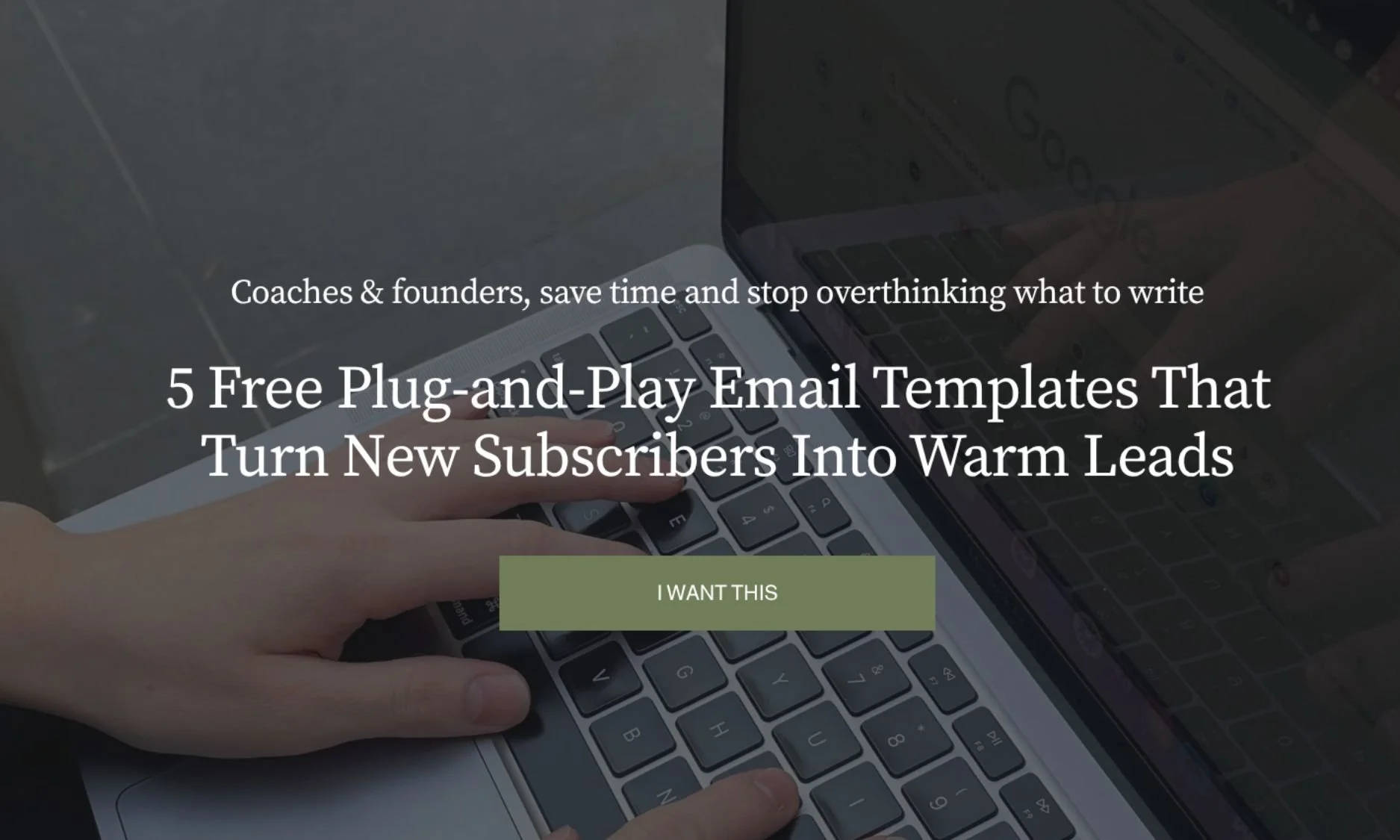
Turn New Subscribers Into Warm Leads - The Launch Prep Email Pack by Rachel
5 free plug-and-play email templates that build trust with new subscribers, create curiosity around your paid offer, and guide them from "this is helpful" to "I want more".
PSA: I have actually used Rachel’s email templates myself, and I was able to rewrite my welcome email sequence in hours, compared to my last one, which took weeks! They are super helpful, and they saved me so much time and energy, so make sure you grab ’em while they’re still free (because really, she should charge for them).
Want more Sarah and Rachel?
Of course you do!
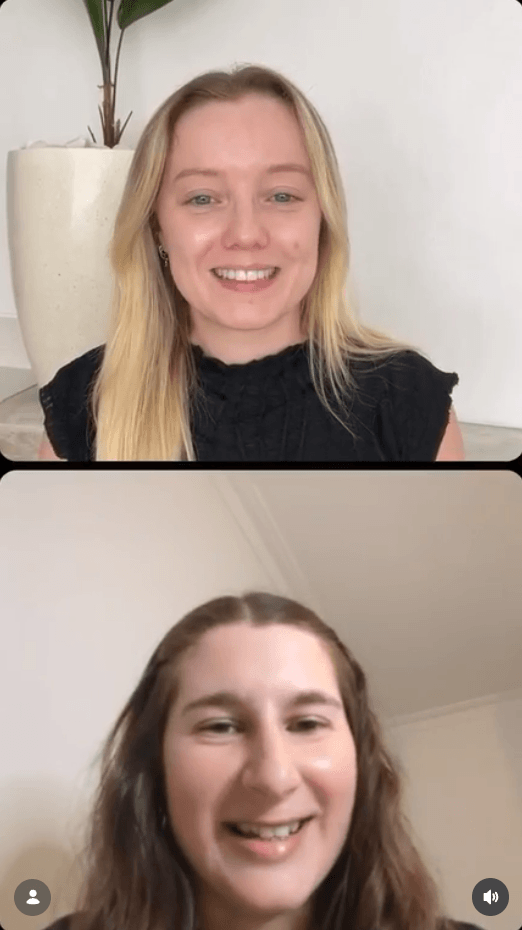
If you enjoyed the LinkedIn Live, check out the Instagram Live Rachel and I did together in 2025.
We chatted all things brand voice and how to add more personality into your emails without overthinking every word.
We covered:
What brand voice actually is (and how to find yours)
How to keep your tone consistent and authentic
Simple ways to add more personality and connection into every send
Unfortunately, I had some pretty horrendous audio issues, 🙈 (because tech hates me), so I apologise for that. But if you’re willing to overlook that (it’s worth it), this was still a really awesome conversation with loads of actionable takeaways.
So I’d love for you to watch the Instagram Live here and let us know what you think!
About the guest gal:
Rachel Caborn is an email marketing and launch strategist helping founders, coaches, and service providers make more sales from their email list.
She covers everything from weekly newsletters and automated sequences to full launch strategy. Having worked agency-side across 8 and 9-figure ecommerce brands, she now helps her clients turn their email list into their most reliable sales channel.
Her clients have seen sold-out programmes, sold-out events, and six-figure launches.